
Difference Between Sensors and Actuators
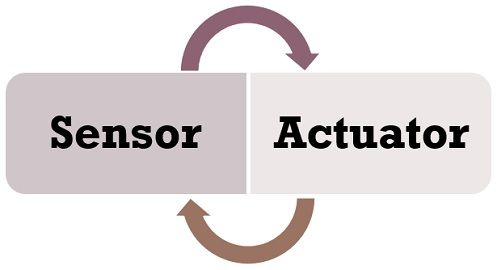
Sensors and Actuators are essential elements of the embedded systems. These are used in several real-life applications such as flight control system in an aircraft, process control systems in nuclear reactors, power plants that require to be operated on an automated control. Sensors and Actuators mainly differ by the purpose both provide, the sensor is used to monitor the changes in the environment by using measurands while the actuator is used when along with monitoring the control is also applied such as to control the physical change.
These devices act as the mediator between the physical environment and the electronic system where the sensor and actuator are embedded.
Content: Sensors and Actuators
Comparison Chart
BASIS FOR COMPARISONSENSORSACTUATORSBasicUsed to measure the continuous and discrete process variables.Impel continuous and discrete processes parameters.Placed atInput portOutput portOutcomeElectrical signalHeat or motionExampleMagnetometer, Cameras, Accelerometer, microphones.LED, Laser, Loudspeaker, Solenoid, motor controllers.
Definition of Sensors
A sensor is an electronic instrument that is able to measure the physical quantity and generate a considerate output. These output of the sensors are usually in the form of electrical signals. Let’s understand with an example, suppose we need to control the speed of our vehicle and for that purpose, we are designing a control system for it. It could not be possible by just fixing the fuel throttle, it needs to be adjusted at it each moment when the speed changes (such as in the uphill and downhill).
 Sensors and actuators